
Views: 0 Author: Site Editor Publish Time: 2026-09-15 Origin: Site

Consumer demand in the fitness sector has permanently shifted away from toxic, heavy, and non-recyclable materials. This shift forces retailers and gym owners to rethink their inventory sourcing. Procurement managers and resale businesses face a distinct margin squeeze. Cheap PVC mats damage brand reputation and carry severe toxicity concerns. Conversely, premium natural rubber mats incur prohibitive freight costs and high unit weights. You need a material that balances performance, safety, and profitability.
Thermoplastic Elastomer (TPE) bridges this gap effectively. It delivers the premium tactile experience consumers expect without the logistical nightmare of heavy rubber. This guide evaluates the technical properties, commercial viability, and implementation risks of sourcing TPE Yoga Mats for retail and bulk distribution. You will learn how to optimize your margin-to-quality ratio, navigate material limitations, and avoid common supplier pitfalls.
Optimal Margin-to-Quality Ratio: TPE offers the premium feel and closed-cell hygiene of higher-end mats at a fraction of the manufacturing and freight costs.
Logistical Advantage: The lightweight nature of TPE significantly reduces bulk shipping and warehousing costs compared to natural rubber or PU (Polyurethane).
Market Positioning: Sourcing an eco friendly yoga mat made of TPE allows brands to market non-toxic, PVC-free, and hypoallergenic properties, capturing the mid-tier consumer market.
End-User Appeal & Versatility: Beyond commercial logistics, TPE's lightweight portability and versatile application across Pilates, restorative, and room-temperature yoga make it a highly marketable retail product.
Known Limitations: TPE is highly water-resistant, making it a slip hazard for hot yoga unless explicitly paired with a grip towel—a critical factor for product descriptions and gym use-case planning.
Analyzing what drives consumer purchasing decisions reveals a clear intersection with wholesale procurement goals. Modern consumers read labels. They understand the implications of chemical plasticizers and demand transparency from the brands they support. They prioritize weight, cushioning, material safety, and visual aesthetics. Procurement teams prioritize unit volume, defect rates, stable supply chains, and shipping efficiency. Aligning these two sets of criteria dictates commercial success in the fitness equipment market. You must source products that satisfy consumer demands while protecting your profit margins.
Legacy materials present significant hurdles for modern retailers. The market tolerance for PVC (Polyvinyl Chloride) is rapidly declining. PVC relies heavily on phthalates for flexibility. These chemical plasticizers carry known health risks and face strict regulations in many global markets, including REACH compliance standards in Europe. Consumers actively avoid PVC products, viewing them as cheap and environmentally harmful. Natural rubber presents a different set of challenges. While highly regarded for its dense grip, rubber is exceptionally heavy. A standard pallet of natural rubber mats can weigh over a ton. This weight destroys freight margins, increases less-than-truckload (LTL) shipping rates, and requires heavy-duty handling equipment. Rubber also triggers latex allergies and degrades quickly when exposed to UV light or improper cleaning agents.
TPE fits perfectly into this market gap. It serves as the ideal mid-market solution. It balances high-end performance characteristics with wholesale profitability. You avoid the toxicity of PVC and the logistical penalties of natural rubber. TPE provides a premium aesthetic and tactile feel. This allows retailers to command a higher retail price point while maintaining low landed costs. The material bridges the gap between budget-conscious beginners and dedicated practitioners who refuse to compromise on safety.
The versatility of TPE expands your addressable market significantly. It appeals far beyond traditional yogis. Pilates practitioners require thicker cushioning for spinal rolls and floor work. Physical therapy clinics need hygienic, easy-to-clean surfaces that will not absorb sweat or bacteria from multiple patients. General home-fitness consumers want a lightweight mat they can easily store in a closet or slide under a bed. TPE meets all these requirements effortlessly. This broad appeal reduces inventory risk. You can market a single SKU to multiple distinct consumer segments, streamlining your supply chain and marketing efforts.
Thermoplastic Elastomers feature a unique cellular structure. They are physical mixes of polymers, typically a plastic and a rubber, which combine the manufacturing ease of thermoplastics with the flexible performance of elastomers. This hybrid structure allows TPE to achieve high-density joint support. It provides exceptional rebound without requiring excessive thickness. When a user presses a hand or knee into the mat, the material compresses to absorb the impact. It then immediately returns to its original shape. This rapid rebound prevents the "bottoming out" effect common in cheap EVA foam mats, where the user ends up feeling the hard floor underneath.
Industry consensus has established 6mm as the sweet spot for TPE mats. This thickness offers optimal joint protection for knees and wrists. It achieves this without compromising standing balance or grounding. Thicker mats, such as 8mm or 10mm options, often create instability during standing poses like Tree or Warrior III. The extra foam creates a wobble effect. Thinner mats, like 3mm or 4mm versions, fail to provide adequate cushioning for restorative practices or users with sensitive joints. The 6mm standard maximizes user comfort while keeping rolled dimensions manageable for shipping cartons and retail display racks.
During factory evaluations, quality control teams measure this density using a durometer to test Shore Hardness. A high-quality TPE mat typically registers between 15 and 20 on the Asker C scale. This specific hardness range ensures the mat is soft enough to cushion joints but firm enough to prevent tearing during dynamic movements.
Dry grip performance is critical for standard restorative, Hatha, and Vinyasa practices. TPE excels in these room-temperature environments. The material features a distinct tactile "sticky" feel. This stickiness differs from the heavy, porous grip of natural rubber. The surface friction of TPE locks hands and feet in place during Downward Dog. It prevents mid-pose slipping without feeling abrasive against the skin.
Manufacturers enhance this mechanical grip by pressing specific traction patterns into the hot material during the extrusion process. Heated rollers emboss textures—such as wave patterns, leaf motifs, or geometric grids—directly into the surface. These micro-textures increase the surface area in contact with the user's skin, significantly improving traction.
You must understand the hot yoga caveat. TPE utilizes a closed-cell construction. It is highly water-resistant. This means it does not absorb moisture. During a heavy sweat session, moisture pools on the surface. This pooling creates a severe slip hazard. Retailers must position TPE correctly to avoid negative reviews and potential injury claims. You should explicitly state that TPE is designed for dry practices. If targeting the hot yoga market, always bundle TPE mats with specialized microfiber grip towels that can absorb the sweat and provide secondary traction.
The closed-cell construction provides significant antimicrobial benefits. Because the mat cannot absorb sweat, it also cannot absorb bacteria, dead skin cells, or odors. This makes TPE inherently more hygienic than open-cell materials like Polyurethane (PU), which act like sponges. Gym owners and studio managers prefer closed-cell mats because they prevent the transmission of skin infections between users in high-traffic commercial environments.
Hypoallergenic assurance is another major selling point. TPE is completely free of latex, PVC, and phthalates. This establishes a critical safety standard for commercial gyms and sensitive consumers. You eliminate the liability of triggering a severe latex allergy on your premises, a risk always present when outfitting a studio with natural rubber mats.
Ease of cleaning protocols further reduces product degradation. End-users and gym staff can maintain these mats with minimal effort. The standard cleaning protocol involves three simple steps:
Spray the surface lightly with a mixture of water and mild dish soap.
Wipe the mat down thoroughly with a clean microfiber cloth to remove surface oils.
Hang the mat to air dry flat in a well-ventilated room, avoiding direct sunlight which can degrade the elastomers over time.
This simple maintenance routine prevents the material breakdown often caused by harsh chemical cleaners. It directly reduces customer complaints and warranty claims, ensuring the product maintains its aesthetic appeal for years.
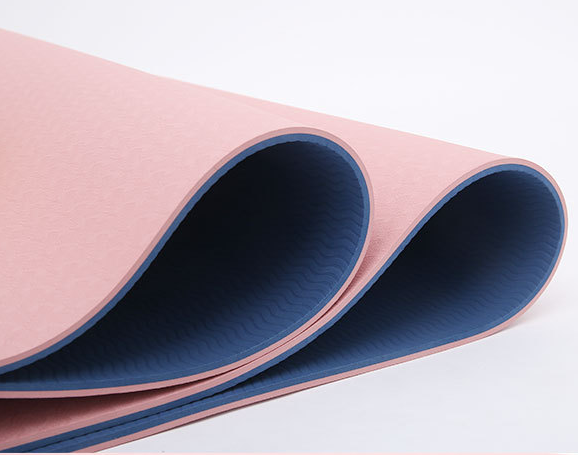
The weight difference between wholesale TPE yoga mats and natural rubber equivalents is staggering. A standard 6mm TPE mat weighs roughly 2 to 2.5 pounds. A natural rubber mat of similar dimensions weighs between 6 and 8 pounds. This massive weight reduction directly impacts your bottom line. It lowers the dimensional weight calculations used by freight carriers and drastically alters container loading strategies.
Consider the mathematics of international shipping. When loading a 40-foot High Cube (HQ) container, weight limits often become a bottleneck before volume limits when shipping heavy rubber. Because TPE is so light, you can floor-load the container to its maximum volumetric capacity without exceeding the legal weight limits of the chassis. This maximizes the number of units per shipment, driving down the landed freight cost per unit.
Reduced weight impacts every stage of the supply chain. Domestic shipping for direct-to-consumer (DTC) e-commerce brands becomes much more affordable. Courier services like FedEx and UPS penalize heavy, oversized packages. TPE keeps your parcels in lower billing tiers. Warehouse storage costs decrease because lighter cartons are easier to stack, handle, and organize. Your warehouse staff can move inventory faster with less risk of workplace injury.
You can translate this logistical advantage into a consumer-facing marketing angle. Portability is a major selling point. Consumers want a mat they can easily carry on the subway, attach to a backpack, or walk to the local studio. Emphasize the lightweight nature of TPE in your product descriptions. It solves a real pain point for the daily commuter who refuses to lug an 8-pound rubber mat across town.
Manufacturing flexibility makes a custom TPE yoga mat highly attractive for brand differentiation. The thermal molding process allows for extensive customization without compromising material integrity. During production, factories can extrude two different colors of TPE simultaneously. These layers pass through heated rollers, thermally bonding them together without the use of toxic glues or adhesives. This creates a visually striking dual-color product with a distinct top and bottom.
Different textures can be molded onto each side to serve different practice styles. You might specify a deep, aggressive wave pattern on the bottom for floor traction, and a softer, micro-pebble texture on top for hand comfort.
Laser-engraved branding offers a premium finish. Unlike screen printing, which uses inks that can rub off or crack over time, laser engraving physically alters the top layer of the TPE. It melts the material slightly to create a permanent, subtle logo placement. You can also request custom alignment lines. These visual guides help practitioners maintain proper form during complex poses. Alignment lines add significant perceived value to the product, allowing for higher retail markups and positioning your brand as a technical authority in the fitness space.
Assessing the lifespan of TPE under moderate to heavy use is vital for financial forecasting. A high-quality TPE mat typically lasts one to three years under regular use. The closed-cell structure resists the flaking and crumbling commonly seen in cheap PVC mats. It also resists the rapid oxidation and UV degradation that destroys natural rubber.
This durability impacts return rates and customer lifetime value. Lower return rates protect your immediate margins. A product that lasts builds brand trust. Satisfied customers are more likely to return to your brand for blocks, straps, foam rollers, and apparel. TPE provides the reliability needed to anchor a broader fitness equipment catalog without generating a high volume of customer service tickets.
Understanding how TPE stacks up against alternative materials is essential for accurate procurement and marketing. The following table summarizes the core differences across key commercial metrics.
| Feature | TPE (Thermoplastic Elastomer) | PVC (Polyvinyl Chloride) | Natural Rubber | PU (Polyurethane) |
|---|---|---|---|---|
| Average Weight | Lightweight (2-3 lbs) | Medium (3-4 lbs) | Heavy (6-8 lbs) | Medium-Heavy (5-7 lbs) |
| Material Safety | Non-toxic, Phthalate-free | Contains Phthalates | Non-toxic | Generally Non-toxic |
| Allergen Profile | Hypoallergenic | Hypoallergenic | Contains Latex Proteins | Hypoallergenic |
| Moisture Handling | Closed-cell (Water-resistant) | Closed-cell | Open/Closed hybrid | Open-cell (Absorbs sweat) |
| Primary Use Case | Hatha, Vinyasa, Pilates | Budget general fitness | Advanced grip, Ashtanga | Hot Yoga, Heavy sweat |
Toxicity and compliance clearly separate these two materials. PVC relies on phthalates to remain pliable. These chemicals are heavily regulated and often banned in premium markets due to their environmental and health impacts. TPE boasts a non-toxic, hypoallergenic profile. It passes stringent chemical safety tests with ease, ensuring your inventory will not be held up at customs for compliance violations.
The cost versus value proposition heavily favors TPE. PVC is cheaper to manufacture. However, the slight premium you pay for wholesale TPE yields a disproportionately higher retail price point. Consumers willingly pay more for a non-toxic product. TPE elevates your brand perception, whereas PVC anchors it to the discount bin. Selling PVC in the modern fitness market actively damages brand equity.
Weight and logistics are the primary differentiators here. TPE's lightweight advantage drastically reduces shipping costs across ocean freight, rail, and final-mile delivery. It also makes daily commuting much easier for the end-user. Natural rubber is dense and heavy, making it expensive to ship and cumbersome to carry to the studio.
Allergens present a distinct liability. Natural rubber contains latex. This poses a severe risk for gyms and studios outfitting their spaces, as a latex allergy reaction on-site can lead to medical emergencies. TPE is 100% latex-free. It completely mitigates this allergy liability. Regarding eco-claims, rubber is biodegradable over a long period. However, TPE requires significantly less energy to produce and can be recycled during the industrial manufacturing phase, reducing factory waste.
Moisture management defines the choice between TPE and PU. PU features an open-cell construction. It acts like a sponge, absorbing sweat to maintain a non-slip grip even when soaked. This makes PU the undisputed champion for hot yoga. TPE is closed-cell. It repels moisture, making it durable and easy to clean, but slippery when wet.
Price point also separates the two. PU is a premium, expensive material that requires complex manufacturing processes to bond the PU top layer to a rubber base. It targets the high-end, dedicated yogi. TPE captures the budget-conscious to mid-tier market. It offers excellent performance for standard practices without the premium price tag of PU.
Not all TPE is created equal. Some manufacturers cut costs by mixing pure TPE pellets with cheap fillers like EVA foam or low-grade plastics. This degrades the performance, safety, and lifespan of the final product. You must actively identify these low-grade blends during the sample evaluation phase before committing to a bulk order.
Test physical samples rigorously using the following methods:
The Pinch Test: Pinch the mat hard between your thumb and forefinger. Pure TPE will spring back to its original flat shape almost immediately. If the indentation lingers for several seconds, the manufacturer used too much EVA foam filler.
The Smell Test: Unroll the sample in a neutral room. Pure TPE should be virtually odorless. A strong, acrid, plastic-like odor indicates the presence of PVC fillers or toxic chemical foaming agents.
The Scratch Test: Scratch the surface lightly with your fingernail. Premature flaking or crumbling indicates a poor thermal bond and low-quality raw materials. The surface should remain intact and smooth.
You must understand the reality of TPE recyclability to avoid greenwashing and protect your brand from consumer backlash. The material can indeed be melted down and remolded. This significantly reduces industrial waste during the production cycle. Factory scraps, edge trimmings, and defective mats are ground up, melted, and repurposed rather than landfilled. However, municipal recycling facilities rarely accept consumer-end TPE mats because they lack the sorting infrastructure for mixed elastomers.
Write accurate, compliant marketing copy. Avoid Federal Trade Commission (FTC) greenwashing penalties. Do not claim the product is "100% biodegradable" or "infinitely recyclable" at the consumer level. Instead, focus on verifiable facts. Highlight that the mat is "non-toxic," "PVC-free," "latex-free," and made via "energy-efficient manufacturing." This builds trust with educated consumers who easily spot exaggerated eco-claims.
Thorough supplier vetting prevents costly inventory disasters. Do not rely solely on Alibaba profiles or glossy brochures. Always request verifiable certifications directly from the factory. Demand SGS testing reports for heavy metals, phthalates, and REACH compliance. Ensure the documents match the specific factory name and product line you are purchasing. Do not accept generic, outdated certificates from third-party trading companies.
Evaluate minimum order quantities (MOQs) against custom tooling costs. If you want a unique surface texture, a custom size, or a specific Pantone color match, the factory must create a new mold or adjust their extrusion lines. This incurs a tooling fee. Negotiate MOQs that justify this initial tooling investment. Ensure the factory has a clear quality control protocol for checking thickness consistency, shore hardness, and edge trimming before the mats are shrink-wrapped and packed into cartons.
Transitioning your inventory to TPE requires a strategic approach, but the logistical and marketing benefits far outweigh the initial sourcing effort. By eliminating toxic materials and reducing your freight footprint, you position your brand for sustainable growth in a highly competitive fitness market. Follow these immediate steps to execute your procurement strategy:
Audit your current fitness equipment inventory and immediately phase out any legacy PVC products to protect your brand reputation and ensure regulatory compliance.
Request physical TPE samples from at least three different manufacturers to conduct the pinch, smell, and scratch tests, ensuring you secure a high-quality, filler-free elastomer blend.
Calculate your projected landed costs by factoring in the reduced dimensional weight of TPE compared to your current rubber or PU options, optimizing your shipping container loads.
Finalize your target consumer demographic to determine if you need to bundle these mats with microfiber grip towels for hot yoga applications.
Update your marketing copy and product descriptions to highlight the non-toxic, PVC-free, hypoallergenic, and lightweight benefits of your new inventory.
A: TPE stands for Thermoplastic Elastomer. It is a hybrid material combining the flexible, slip-resistant qualities of rubber with the easy, energy-efficient manufacturing processes of plastic. This creates a lightweight, durable, and highly cushioned surface ideal for fitness applications.
A: They offer significant environmental benefits over traditional options. TPE is completely PVC-free and requires less energy to manufacture. Industrial waste can be melted down and remolded. However, end-of-life recycling depends on local municipal facilities, which often do not process mixed elastomers.
A: Yes. TPE completely eliminates the toxic phthalates required to make PVC flexible. Furthermore, TPE provides superior tactile stickiness, better joint cushioning, and a much faster rebound compared to the dense, often slippery surface of cheap PVC mats.
A: TPE is not recommended for hot yoga on its own. It features a closed-cell construction that repels water. Sweat will pool on the surface, creating a severe slip hazard. For sweaty practices, you must pair a TPE mat with a specialized microfiber grip towel.
A: With moderate use and proper maintenance, a high-quality TPE mat typically lasts between one and three years. Its closed-cell structure resists flaking and bacterial breakdown, though heavy daily use in commercial studio settings will accelerate surface wear.
A: The industry standard is 6mm. This thickness provides the optimal balance. It delivers excellent joint support for knees and wrists during floor poses while maintaining enough firmness to ensure stability and grounding during standing balancing postures.
A: Cleaning is simple due to the closed-cell, bacteria-resistant structure. Wipe the mat down with a damp cloth using mild soap and water. Avoid harsh chemical sprays, bleach, or essential oils, as these can degrade the thermal bonds of the elastomer over time.


