
Views: 0 Author: Site Editor Publish Time: 2026-04-07 Origin: Site

A yoga wheel looks impressive—and that is exactly why many beginners hesitate. The first impression is often that the yoga wheel is only for advanced backbends, deep flexibility, or social-media-level poses. But in real practice, the wheel is simply a support tool. Just like a yoga block or strap, it helps you create shape with better alignment and less strain. The difference is that the wheel provides curved support, which can be especially helpful for opening the chest, mobilizing the upper back, and improving posture—areas where many beginners feel tightness from desk work and daily stress.
From our perspective at Hunan Ecoo Fitness Co.,Ltd., beginners can absolutely use a yoga wheel—if they start with the right mindset and the right progressions. The wheel is not meant to force flexibility. It is meant to improve comfort and control. When used correctly, it can make certain movements safer by supporting the spine, reducing pressure on wrists, and helping beginners learn how to distribute weight properly. In this guide, we will explain when a beginner should use a yoga wheel, what benefits it offers, which poses are safest to start with, and what mistakes to avoid.
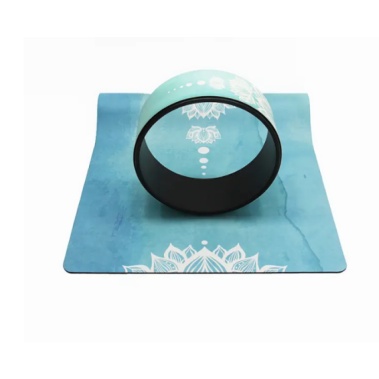
A yoga wheel is a circular prop, typically with a strong inner core and a padded outer surface. It can be used to:
support the back in gentle chest-opening positions
massage and mobilize the spine with controlled rolling
improve shoulder flexibility and posture
assist balance and core engagement
reduce wrist strain by offering an alternative hand position
For beginners, the wheel is most valuable for mobility, posture, and supported stretching, not extreme backbends.
A yoga wheel can be very beginner-friendly, but only when it is used as a support tool rather than a “performance prop.” The wheel is designed to provide curved support that helps you open the chest, mobilize the upper back, and improve posture—areas where many beginners feel stiffness. The key is to keep the practice simple, controlled, and comfortable.
Start with support, not performance
In the beginning, treat the wheel like a cushion that supports your body, not a tool to push deeper flexibility. The safest starting point is gentle chest opening and upper back mobility. If you begin with advanced backbends, you may compress the lower back or strain the neck and shoulders. Starting with supported positions helps you build trust and body awareness.
Keep movements slow and controlled
Fast rolling or sudden shifts of weight can make the wheel unstable. Beginners often tense up when they feel unsteady, which defeats the purpose of opening and relaxing. Slow movement allows you to feel where your body is tight and to correct alignment before it becomes uncomfortable. If you can’t control the movement, reduce the range and slow down.
Use the wall or floor for stability
Many beginner wheel exercises become much safer when the wheel is used near a wall. The wall acts as a limit that prevents the wheel from rolling too far or slipping away unexpectedly. This is especially helpful for shoulder openers and supported backbends. A stable floor and a yoga mat also improve grip and reduce sliding.
Avoid pain and deep compression
A yoga wheel should create a “good stretch” feeling—not sharp pain. If you feel pinching in the lower back, pressure in the neck, or nerve-like discomfort, stop and adjust immediately. Beginners should focus on the upper back (thoracic spine) rather than rolling into the lumbar spine, which is already naturally more flexible and easier to compress.
Focus on breathing
Breathing is your safety signal. If your breath becomes short, forced, or held, you are likely going too deep or moving too fast. Smooth breathing helps relax tight muscles and improves mobility safely. A simple rule: if you can’t breathe calmly, reduce the intensity.
Many beginners have tight chest muscles and rounded shoulders from sitting. A yoga wheel supports a controlled chest opening without forcing range.
The thoracic spine (upper back) often needs mobility. The wheel provides a supportive curve that encourages extension where people are stiff.
Instead of “dropping back” into a backbend, beginners can learn controlled opening with the wheel supporting the spine.
Using the wheel to open shoulders can reduce tension and improve overhead range of motion over time.
Some beginners find it easier to practice balance with the wheel as a stable guide, especially when used near a wall.
Below are safe, beginner-friendly ways to start.
Sit on the mat and place the wheel behind you.
Slowly lean back so the wheel supports your mid-back.
Keep feet grounded and hands relaxed.
Breathe slowly for 30–60 seconds.
This is often the best first use of a yoga wheel.
Sit with knees bent and place the wheel behind your back.
Slowly roll up and down a short range in the upper back.
Keep the movement controlled and avoid rolling into the lower back.
Kneel and place hands on top of the wheel.
Slowly roll the wheel forward as your chest lowers slightly.
Keep core engaged and avoid collapsing into the shoulders.
Place hands on the wheel with fingers pointing down.
Keep the wheel stable and practice a short hold.
This reduces wrist angle stress for some users.
Trying advanced backbends too early
Deep wheel backbends require core control and shoulder openness.
Rolling into the lower back
Beginners should focus on upper back mobility, not lumbar compression.
Letting the wheel slide quickly
Always keep movement slow and controlled.
Holding breath during discomfort
Holding breath increases tension and reduces mobility.
Using the wheel on slippery surfaces
Use a yoga mat and a stable floor to prevent slipping.
A beginner should prioritize stability and comfort.
Feature | Beginner-friendly choice | Why it matters |
Width | wider wheel | more stable support |
Surface | thicker padding | more comfort on spine |
Grip | anti-slip texture | safer rolling and holds |
Weight capacity | strong core | confidence and durability |
Size | standard size | fits most starter drills |
If you plan to use the wheel frequently for back support and mobility, comfort padding becomes a high-value feature.
Most beginners get good results with:
5–10 minutes, 3–5 times per week
focus on chest opening and upper back mobility
gradually increase time and intensity
Consistency matters more than intensity. A wheel works best as a steady mobility tool.
Beginners should use extra caution (or consult a professional) if they have:
recent back injury or disc issues
uncontrolled neck pain
severe osteoporosis
dizziness or balance conditions
shoulder instability
A yoga wheel is a tool, not a medical device. Safety comes first.
So, can a beginner use a yoga wheel? Yes—when used correctly, the wheel can be one of the most helpful props for improving posture, opening the chest, mobilizing the upper back, and building comfort in backbend preparation. The key is to start with gentle, supported exercises, keep movements slow, and avoid rushing into advanced poses. For beginners, the wheel is not about showing flexibility—it is about building safe mobility and better body awareness over time.
At Hunan Ecoo Fitness Co.,Ltd., we develop yoga props designed for real practice needs, including beginner-friendly yoga wheels with stable structure and comfortable padding. If you’d like to learn more about selecting the right yoga wheel for your users or product line, you are welcome to contact us for more information and support.
Yes. Beginners can use a yoga wheel safely by starting with supported chest openers and gentle upper back mobility, keeping movements slow, and avoiding deep backbends early.
A yoga wheel can improve posture, open the chest, increase upper back mobility, support shoulder flexibility, and reduce tension from long sitting.
Beginners should avoid rolling into the lower back, moving too fast, using the wheel on slippery surfaces, and attempting advanced backbends without core and shoulder readiness.
Choose a wider, stable wheel with anti-slip padding, strong weight capacity, and comfortable outer cushioning for safer, more confident practice.


