
Views: 0 Author: Site Editor Publish Time: 2026-04-01 Origin: Site

If you’ve just started using an Acupressure Mat, the first experience can be surprising. Some people feel a sharp, prickly sensation in the first minute. Others feel heat, pressure, or a wave of “release” once the body settles. That’s why timing matters. The question “How long should you lay on an acupressure mat?” isn’t really about a single perfect number—it’s about finding a session length that feels tolerable, repeatable, and easy to fit into your routine. If you stay too short, you may not get a full “settle in” experience. If you stay too long too soon, it may feel uncomfortable and make you avoid using it altogether. The best approach is gradual and consistent.
From our perspective at Hunan Ecoo Fitness Co.,Ltd., an acupressure mat is a simple home tool that many people use for relaxation-style routines, post-work decompression, or quiet recovery time. It’s not a replacement for professional care, and it shouldn’t feel like a test of toughness. In this guide, we’ll share practical timing ranges, how to build up comfortably, what factors change the ideal session length, and how to use an acupressure mat in a way that fits real life.
For many users, a comfortable routine with an acupressure mat usually falls into these ranges:
Beginners: 5–10 minutes
Regular users: 10–20 minutes
Experienced / comfort-adapted users: 20–30 minutes
These are practical ranges, not strict rules. The “right” time depends on your skin sensitivity, how your body weight distributes across the mat, and how quickly you adapt to the pressure points. Some people naturally tolerate longer sessions, while others prefer shorter, more frequent use. The most important thing is choosing a duration you can repeat consistently without feeling like you have to “push through” discomfort.
One helpful mindset is to treat acupressure mat use like stretching: it works best when it becomes a steady habit. If you start with a time that’s too long, the experience can feel too intense and you might stop using it. If you start with a time that’s too short, you may never reach the “settling” stage where many people begin to feel calmer and more comfortable. A balanced starting point is often 5–8 minutes, then gradually increasing if it feels easy and pleasant
Most people feel the most intense sensation at the beginning. That’s normal, and it happens for a few simple reasons:
The spikes create a new pressure pattern on the skin. Your body immediately notices it, especially if you’re not used to it.
Your body hasn’t adjusted yet. In the first minutes, muscles may tense slightly and breathing can become shallow without you noticing—both make the sensation feel sharper.
Existing tension can amplify sensitivity. Tight shoulders, upper back tension, or stress-related stiffness can make the pressure points feel more “pinpoint” at first.
If you stay still and breathe slowly, many users notice the feeling shifts from “sharp” to warm, heavy, or like a dull pressure after a few minutes. This is often called the “settling phase,” and it’s why many regular users prefer sessions longer than 5 minutes. The first minutes are the adaptation window; after that, the experience often becomes more relaxing.
A practical tip: try to keep the first minute calm—soften your shoulders, slow the breath, and avoid shifting around too much. Constant micro-movement can make the points feel sharper because the spikes rub across the skin instead of staying stable.
People use acupressure mats for different reasons, so it helps to match timing to what you want from the session.
This is ideal if you want a short “reset” after work, after a long drive, or before a shower. The goal here is not a long routine—just enough time to let the body settle and release some tension. Short sessions are also easier to repeat every day, which is why many beginners start here.
This range works well if you want time to fully settle and breathe. Many users choose it in the evening because it fits naturally into a wind-down routine. If you’re already comfortable with the mat, 10–20 minutes often feels like the most balanced “standard session.”
This is best when you’re already adapted to the sensation and you enjoy a longer, quieter session. Many experienced users pair this with calming music, guided breathing, or a short mindfulness routine. The key is that it should still feel comfortable—longer is only helpful if it stays pleasant and sustainable.
User Type | Suggested Time | Why It Works |
First-time user | 3–7 minutes | Helps you adapt without overdoing it |
Beginner (first week) | 5–10 minutes | Builds consistency comfortably |
Regular user | 10–20 minutes | Enough time to settle and relax |
Experienced user | 20–30 minutes | Longer session once sensation is familiar |
If you want an easy way to progress:
Days 1–3: 3–5 minutes
Days 4–7: 5–10 minutes
Week 2: 10–15 minutes
Week 3+: 15–20 minutes (or stay here if it feels best)
Many users find that consistent short sessions work better than occasional long sessions.
If the mat feels too intense at first, you don’t have to quit—you can adjust the setup.
Try lying on the mat with a thin T-shirt. Once you adapt, you can gradually reduce layers.
Some people find it easier to place the mat under the upper back first rather than the lower back.
If your neck feels strained, add gentle head support.
Tension makes the sensation sharper. Slow breathing and softening into the mat usually helps.
This is the classic method and is often used for general relaxation.
Place the mat against a wall and lean gently. This reduces pressure intensity and helps you adapt.
Some users place the mat behind the back while sitting in a chair for a lighter session.
Position | Intensity Level | Best For |
Wall-supported | Low to medium | Beginners and sensitive users |
Chair-supported | Low | Light pressure, short sessions |
Lying down | Medium to high | Full experience and longer sessions |
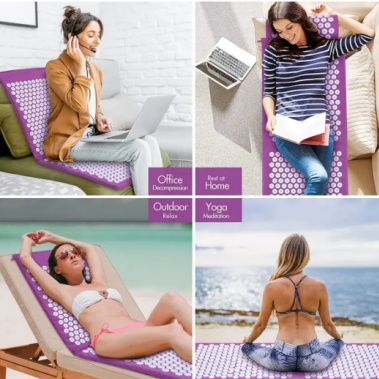
Many people use it:
daily for short sessions
3–5 times per week for longer sessions
Consistency matters more than pushing long sessions. If your skin feels irritated or you feel overly sensitive, take a rest day and return with shorter timing.
Reduce time or stop if:
the sensation stays sharp and unbearable after a few minutes
your skin becomes overly irritated
you feel dizzy or uncomfortable
you notice numbness or unusual tingling
An acupressure mat should feel intense at first for some people, but it should not feel like you’re forcing yourself through pain.
If you have specific medical conditions, skin sensitivity issues, or are unsure, it’s better to take a cautious approach and seek professional advice before building longer routines.
Here’s a practical habit many users like:
Set a timer for 10 minutes
Lie down and breathe slowly for the first 2–3 minutes
Once sensation settles, relax shoulders and let body weight distribute
Finish by rolling gently to one side and standing up slowly
This simple structure makes sessions feel consistent and repeatable.
So, how long should you lay on an acupressure mat? For beginners, 5–10 minutes is often a comfortable starting range. Many regular users prefer 10–20 minutes, and experienced users who feel fully adapted may choose 20–30 minutes. The best session length is the one you can repeat consistently without forcing discomfort. Start short, adjust your setup if needed, and build gradually—your routine should feel practical, not overwhelming.
At Hunan Ecoo Fitness Co.,Ltd., we focus on fitness and recovery accessories that support daily routines—simple tools that fit real life. If you want to learn more about acupressure mat options, materials, and product details, you’re welcome to explore more through Hunan Ecoo Fitness Co.,Ltd. and contact our team for information.
Many beginners start with 3–7 minutes, then build toward 10 minutes as comfort improves.
For many regular users, 10–20 minutes is common. If you feel comfortable and adapted, 20 minutes can be fine, but it’s best to build up gradually.
If the mat feels too intense, start with a thin T-shirt or light layer. Many users reduce layers over time as they adapt.
Many people use it daily for short sessions or several times per week for longer sessions. Consistency and comfort are more important than pushing long durations.


