
Views: 0 Author: Site Editor Publish Time: 2026-03-13 Origin: Site

A yoga block is one of those tools people often underestimate. Some beginners feel they “shouldn’t need it,” while some experienced practitioners assume blocks are only for making poses easier. In reality, the point of using a yoga block is not to “cheat” a pose—it is to practice with better alignment, more stability, and smarter progression. Yoga is not a competition for how far you can stretch. It is a method of building strength, mobility, and awareness safely over time. When your body is not yet ready for the full depth of a posture, forcing range can create strain in the lower back, shoulders, wrists, or knees. A yoga block provides an adjustable support that helps you hold the posture with control, breathe steadily, and gradually improve.
From our perspective at Hunan Ecoo Fitness Co.,Ltd., yoga blocks are used in studios and home practice for a simple reason: they make yoga more accessible and more effective for all levels. They help beginners get into correct shapes without tension, and they help advanced practitioners refine alignment and explore variations with safety. In this article, we’ll explain what a yoga block is for, how it supports different goals, and how to use it in practical ways across common poses.
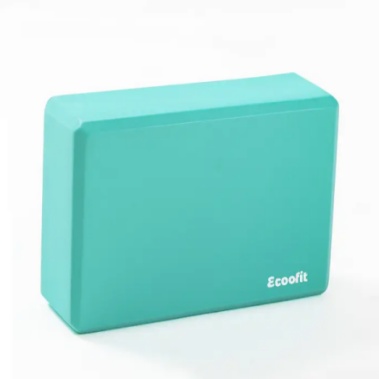
A yoga block is a firm prop—typically made from foam, cork, or EVA—that acts like an extension of the floor or a support under the body. It can:
bring the “ground” closer to your hands
support hips, back, or head in restorative poses
reduce strain on joints by improving alignment
increase stability in balance poses
help you hold poses longer with proper form
The block is not only for flexibility. It helps with strength, balance, and technique too.
Many posture challenges in yoga come from alignment, not flexibility. When a pose is too deep for your current range of motion, the body naturally tries to “solve the problem” by compensating elsewhere. That compensation often shows up as twisting through the spine, collapsing in the chest, rounding the back, or shifting weight unevenly into one hip, wrist, or shoulder. In the short term, this may help you “reach” the pose, but in the long term it can create strain patterns that limit progress and increase discomfort.
A yoga block helps by giving you a stable, adjustable support point so you can build the pose from correct structure first. Instead of chasing the floor or forcing a deeper range, you bring the floor closer to you. This allows you to keep the spine long rather than rounded, maintain a lifted chest, and stack shoulders and hips in a more neutral line. It also helps distribute weight evenly, which reduces unnecessary pressure on the wrists, lower back, and neck.
Example: Triangle Pose (Trikonasana)
Triangle is one of the clearest examples of how blocks support alignment. If your hand cannot comfortably reach the floor, you may round the spine and collapse the chest, which turns the pose into a “forward fold with twisting.” Placing a block under your lower hand lets you keep the torso open and the spine extended. You can focus on length from hip to fingertips, keep the shoulders aligned, and breathe more smoothly. Over time, this improves mobility in the hips and hamstrings without compromising posture integrity.
Stretching in yoga should feel strong, steady, and controlled—not sharp, painful, or forced. One of the most common reasons people feel discomfort in yoga is trying to move too quickly into flexibility. When the body senses excessive stretch, it may tighten defensively, making the posture feel even harder. This is especially common in the hamstrings, hips, shoulders, and lower back, where people often push range before they have enough stability.
A yoga block helps create a safer stretching environment by reducing the need to “reach” beyond your current capacity. With support, you can hold a posture in a range where the muscles can gradually relax instead of resisting. Blocks reduce overstretching and allow you to maintain a steady breathing rhythm, which is often the key to making stretches effective. When you are supported, you can also hold the pose longer without strain, and longer holds tend to improve mobility more safely than short, aggressive pushes.
Blocks are not only for “making poses easier.” They can also add challenge by improving activation and leverage.
Examples:
squeezing a block between thighs in Bridge Pose to activate inner legs
pressing hands into blocks to improve shoulder engagement
using blocks under hands in Plank to deepen range and strengthen shoulders
When used intentionally, blocks help you train strength with better technique.
Balance poses often fail because the practitioner is unstable, not because they lack strength. A block can act as a stable contact point, improving body awareness and confidence.
Examples:
using a block under the hand in Half Moon Pose
placing a block near the wall for support while learning Tree Pose
elevating the floor in standing poses for better stability
This is especially helpful for beginners and for anyone practicing in a small space at home.
In restorative yoga, the goal is to relax the body fully. Blocks provide support so your muscles can soften instead of holding tension.
Common uses:
supporting the back in reclined poses
placing under knees to reduce lower back tension
supporting the head to reduce neck strain
assisting in gentle chest opening
Blocks make it easier to hold restorative postures longer, which supports recovery and relaxation.
Pose | Common difficulty | How the yoga block helps |
Forward Fold | tight hamstrings, rounded back | block under hands supports spine length |
Triangle Pose | hand can’t reach floor | block under hand improves alignment |
Bridge Pose | poor leg activation | block between thighs improves stability |
Seated Twist | collapsed posture | block under hips improves spine length |
Supported Fish | chest tightness | block under upper back supports opening |
Child’s Pose | knees or hips tight | block under head improves comfort |
Yoga blocks are not one-size-fits-all. Material and texture affect feel, grip, and firmness.
light and soft
comfortable for restorative use
good for beginners
less stable under heavy weight in some poses
firmer and heavier
very stable for standing poses
good grip, durable
slightly harder feel for sensitive joints
balanced firmness and grip
durable and easy to clean
popular for studio and home use
Most blocks are around 9 x 6 x 4 inches, and can be used on different sides for different heights. Having two blocks is often more useful than one for symmetrical support.
Not true. Advanced practitioners use blocks to refine alignment, create new angles, and safely explore deeper variations.
A block is a tool for correct practice, not a sign of weakness. Even flexible practitioners use blocks to avoid collapsing into joints.
You may use blocks differently as you progress. The block continues to provide value for stability, strength training, and restorative practice.
So, what is the point of using a yoga block? The simplest answer is that it helps you practice yoga with better alignment, safer stretching, and steady progress. A yoga block brings the floor closer when flexibility is limited, supports the body in restorative poses, improves balance confidence, and even increases strength and activation when used intentionally. Instead of forcing range, you build control—then range follows naturally. For beginners, blocks make yoga more accessible and less intimidating. For experienced practitioners, blocks enhance precision and allow smarter variations.
At Hunan Ecoo Fitness Co.,Ltd., we develop yoga props designed to support real practice needs—from stable standing support to comfortable restorative setups. If you want to learn more about choosing the right yoga block material and size for your market or product line, you are welcome to contact us for more information and support.
A yoga block helps beginners maintain proper alignment, reach the floor safely, reduce strain, and build confidence in poses without forcing flexibility.
Yes. By supporting correct posture, a yoga block allows muscles to relax and stretch gradually, making flexibility training safer and more effective.
Yes. Advanced practitioners use yoga blocks to refine alignment, explore variations, build strength, and support deeper or more controlled practice.
Many practitioners prefer two yoga blocks for balanced support in symmetrical poses, restorative practice, and better stability in standing positions.


