
Views: 0 Author: Site Editor Publish Time: 2026-10-14 Origin: Site

A permanent yoga mat crease isn't just an aesthetic flaw. For studios and retailers, it signals compromised structural integrity. It creates trip hazards and triggers costly customer returns. Minor rolling indentations are completely normal after standard use. However, permanent creases indicate a severe failure in material density. They also point to poor transit packaging from the factory.
For B2B buyers sourcing a wholesale yoga mat inventory, understanding foam compression mechanics is critical. You must grasp material recovery rates to avoid receiving dead stock. We will guide you through the exact physical causes of irreversible folding. You will learn how to evaluate different material architectures objectively. Finally, we provide a strict quality assurance checklist. You can use this testing framework to vet suppliers confidently before scaling your orders.
Material dictates recovery: Closed-cell foams (like cheap EVA/TPE) are prone to permanent "compression set," while high-density natural rubber bottoms resist long-term deformation.
Packaging is the primary risk: Improper factory packing (tight folding instead of rolling) during overseas transit causes 80% of unrecoverable creases.
An anti-crease PU yoga mat requires two layers of validation: Buyers must verify both the polyurethane top-coat elasticity and the base density.
Test before scaling: Always stress-test supplier samples for "recovery time" before placing bulk orders for custom yoga mats.
You cannot treat a crease as a mere cosmetic issue. It represents a physical failure inside the material itself. We see many businesses write off these defects as superficial complaints. In reality, a crease means the core material architecture has collapsed. We need to move beyond simple visual inspections. You must understand the technical limitations of foam elasticity. When a mat fails to lay flat, it ruins the user experience. It creates dangerous uneven surfaces during physical practice. It also exposes you to liability if a studio client trips.
Low-density budget materials rely on trapped air pockets. Materials like EVA and low-grade TPE feel soft initially. However, prolonged pressure breaks down their internal cellular walls. Industry experts refer to this failure as "compression set." When heavy weights press into the foam, the delicate cell structure simply crushes. The foam loses its internal air volume completely. It cannot rebound back to its original thickness. Once you crush these closed cells, the damage becomes permanent. The mat loses its essential cushioning properties. Users will feel the hard floor right through the damaged section. This degradation happens rapidly under intense pressure. You cannot reverse this structural collapse.
Global shipping environments punish rubber and foam products severely. Shipping containers experience wild temperature fluctuations during ocean transit. Extreme heat softens budget foams temporarily. Plunging temperatures then make these materials incredibly stiff. This harsh temperature cycling exacerbates material rigidity. Extended periods in a folded state bake creases directly into the product. Suppliers sometimes compress inventory tightly to maximize container space. They stack heavy master cartons on top of poorly packed mats. Over a five-week ocean journey, this constant pressure sets the foam permanently. When you unpack the shipment at your warehouse, the material simply cannot recover. The physical memory of the foam is destroyed forever.
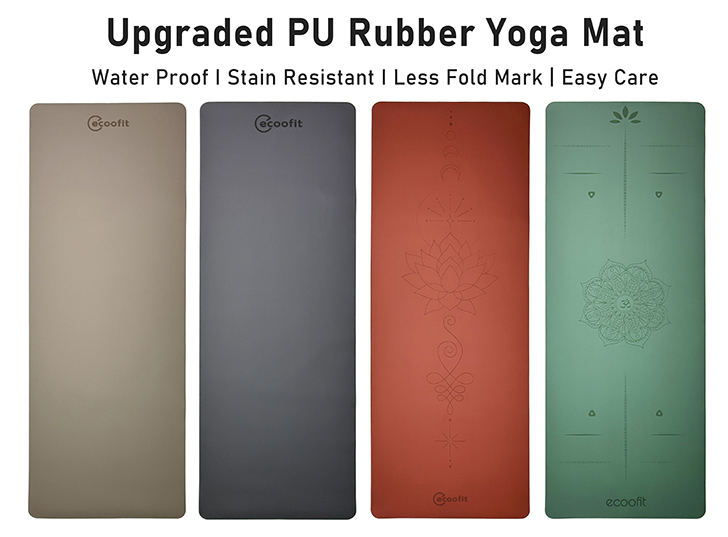
Choosing the right raw material prevents most deformation issues. You must objectively compare the core options available on the market. We evaluate them strictly through the lens of durability and crease resistance. Each material behaves differently under long-term compression.
Table 1: Material Density and Crease Resistance Comparison
| Material Base | Density Level | Crease Resistance | Vulnerability to Compression Set |
|---|---|---|---|
| EVA Foam | Very Low | Poor | High Risk (Crushes easily under weight) |
| TPE (Thermoplastic Elastomer) | Low to Medium | Moderate | High Risk (Prone to denting over time) |
| PVC (Polyvinyl Chloride) | Medium | Moderate to Good | Medium Risk (Becomes brittle in cold) |
| PU + Natural Rubber | Very High | Excellent | Low Risk (Strong elastic memory) |
TPE and PVC remain popular for their low manufacturing costs. They offer a tempting cost-benefit trade-off for budget brands. They feel lightweight and cheap to ship overseas. However, they are highly susceptible to permanent deformation. If you place heavy studio equipment on them, they dent forever. Tight storage in studio cubbies also causes lasting damage. TPE relies entirely on a closed-cell foam matrix. It lacks the elastic memory needed for rapid recovery. PVC offers slightly more durability but becomes brittle over time. Neither material survives improper factory folding well. They both fail miserably during extended compression tests.
Premium studios demand superior performance from their equipment. High-grade polyurethane paired with a high-density natural rubber base sets the industry standard. This architecture defines the true anti-crease PU yoga mat. The natural rubber base provides substantial weight and structural integrity. Rubber possesses a natural elasticity. This elasticity creates a strong "memory" effect within the material. The memory allows the mat to lay flat immediately. It unrolls perfectly even after prolonged storage. The top PU layer absorbs moisture while maintaining flexibility. Together, these two layers resist compression set effortlessly. They deliver unmatched durability for high-traffic environments.
B2B buyers frequently make preventable purchasing errors. These implementation risks lead directly to receiving damaged inventory. You must audit your supplier's handling procedures. Simple oversights cause massive financial losses.
Packaging protocols dictate the survival of your inventory. We warn strongly against suppliers who fold mats. They fold them merely to save on volumetric shipping weight. This short-sighted tactic guarantees a high defect rate. Mats must always be rolled properly at the factory. They require a supportive inner cardboard core. This core prevents the center from collapsing under pressure. Workers must then wrap the rolled product in protective film. The film keeps moisture out and maintains the rolled shape. If your supplier skips the cardboard core, gravity will flatten the rolls.
Common packaging mistakes include:
Allowing suppliers to fold mats into squares to fit smaller boxes.
Shipping rolled mats without a rigid inner cardboard cylinder.
Stacking loose mats instead of using reinforced master cartons.
Using thin exterior boxes that collapse under the weight of natural rubber.
Buyers often fall in love with beautiful top prints. They ignore the foundational base density entirely. A premium top layer cannot compensate for a low-density base. You must test the base foam yourself. Pinch the bottom rubber firmly between your thumb and index finger. If the base compresses easily between two fingers, it lacks density. A soft base will definitely suffer permanent damage in transit. A reliable material should feel incredibly dense. It should resist your pinch test vigorously. High density prevents heavy objects from crushing the internal structure.
You need a specific testing framework for physical samples. Do not rely on visual inspection alone. Use these actionable QA dimensions to evaluate potential suppliers. A rigorous checklist saves you from ordering defective products.
Follow these steps to qualify a supplier:
Perform a prolonged compression test on the core material.
Verify the thermal bonding strength between all layers.
Assess the surface stretch limits to ensure print durability.
We recommend a brutal but effective evaluation method. Instruct your QA team to fold the sample mat tightly. Do not roll it. Place a heavy weight directly on the folded edge. Leave it under this immense pressure for exactly 48 hours. Remove the weight and lay the mat on a flat floor. Measure the exact recovery time at room temperature. A high-quality rubber base should flatten out within a few hours. If the crease line remains clearly visible the next day, reject the supplier. This test accurately simulates harsh shipping conditions.
A dual-layer mat introduces a new physical failure point. You must check the bonding between the PU top layer and the rubber base. Factories use either liquid glue or heat-bonding processes. Poor glue application causes the layers to separate prematurely. Substandard heat-bonding weakens the overall structure significantly. When separation occurs, the top layer bubbles up. It will then crease completely independently of the base layer. Pull firmly at the corners of your sample. The layers should feel like one unified solid piece. They should resist peeling under moderate force.
The elastic modulus measures a material's resistance to being deformed elastically. You must verify the material's ability to stretch. It must return to its original shape without surface cracking. This elasticity is absolutely crucial for a custom yoga mat. Custom printed designs often crack if the PU layer lacks flexibility. Stretch the material forcefully across your knee. Inspect the printed surface under bright light. If you see micro-tears in the ink or PU, the elastic modulus is too low. The material will degrade quickly during regular studio use.
Moving from product evaluation to supplier selection requires strict logic. You have tested the physical samples successfully. Now you must ensure the factory can scale their quality. Consistent mass production is entirely different from making one good sample.
Do not trust verbal promises regarding packaging. Require photographic proof of bulk packaging methods. Ask for photos of their master cartons and inner cores. You must review these documents before authorizing a final PO. Experienced factories maintain standard operating procedures for container loading. They will gladly share their loading guidelines with you. If a supplier hesitates to show their packing line, walk away. Transparency in packaging is non-negotiable for bulk orders.
Ambiguity causes massive financial losses during defect disputes. Establish clear Service Level Agreements (SLAs) immediately. You must define what constitutes a permanent failure upon delivery. Distinguish this clearly from acceptable, temporary settling. Clarify the exact return or replacement terms in writing. These terms must cover batches damaged due to improper factory packing. Ensure your contract holds the factory financially responsible for folded inventory. Clear agreements prevent suppliers from blaming shipping companies for their packing failures.
Permanent creases represent a fundamental material and packaging failure. They are not inevitable wear and tear. You can eliminate these defects through careful sourcing. Investing slightly more in a high-density PU base pays off immensely. Insisting on strict rolled-packaging protocols drastically reduces bulk order defect rates. You protect your brand reputation and your profit margins.
Advise your sourcing team to request technical specification sheets early. Review the stated density metrics and bonding methods. Always demand proper physical samples before finalizing a supplier contract. Apply the 48-hour fold test strictly. Your diligence will yield a superior product line that withstands the rigors of global transit and daily studio use.
A: Generally, no. While gentle heat (like sunlight) can help minor indentations settle, a structural crease means the foam cells are permanently crushed. Attempting to iron or blast heat on a PU yoga mat will melt the surface and destroy the grip.
A: Not inherently. Density matters more than thickness. A 6mm low-density TPE mat will crease faster than a high-density 4mm natural rubber mat.
A: Mats should always be rolled loosely, never folded, and stored horizontally or on wall-mounted racks. Avoid stacking heavy equipment on top of rolled mats.


